The SpockOps Blog

What we learn running, pricing and governing GitHub Actions, written down as we go.
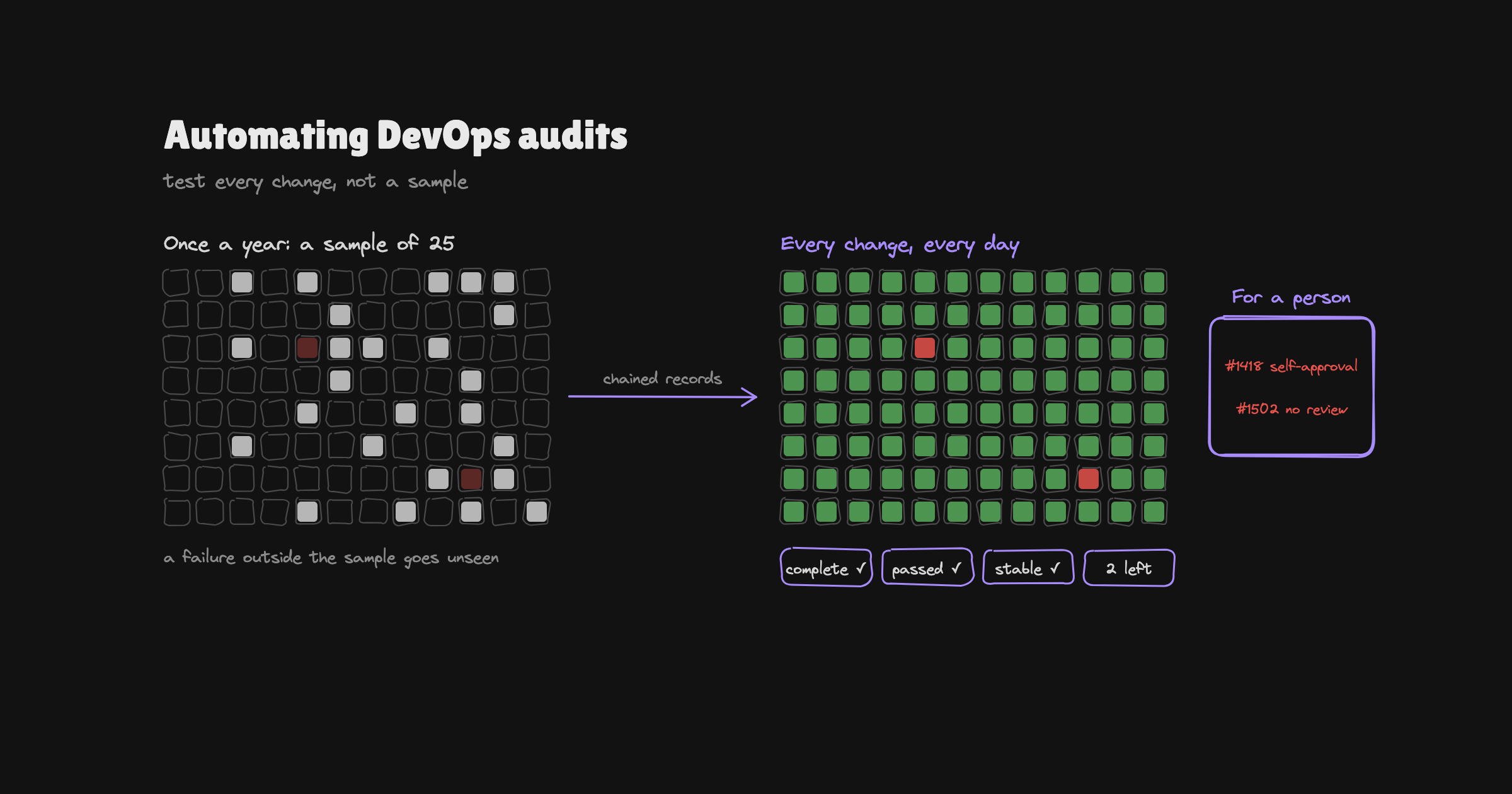
Automating DevOps auditstest every change, not a sampleOnce a year: a sample of 25a failure outside the sample goes unseenchained recordsEvery change, every daycomplete ✓passed ✓stable ✓2 leftFor a person#1418 self-approval#1502 no reviewA year of changes as a grid: the annual audit tests a sample of 25 and misses a failure outside it; with chained records every change is tested, the population is complete, controls pass, rules are stable, and the two exceptions go to a person
compliancedeployments

Automating DevOps audits: test every change, not a sample

Auditors sample changes because checking evidence is costly. Chained deployment records make it cheap, so every change can be tested, every day.

Sash8 min read

More tagged deployments

4 posts
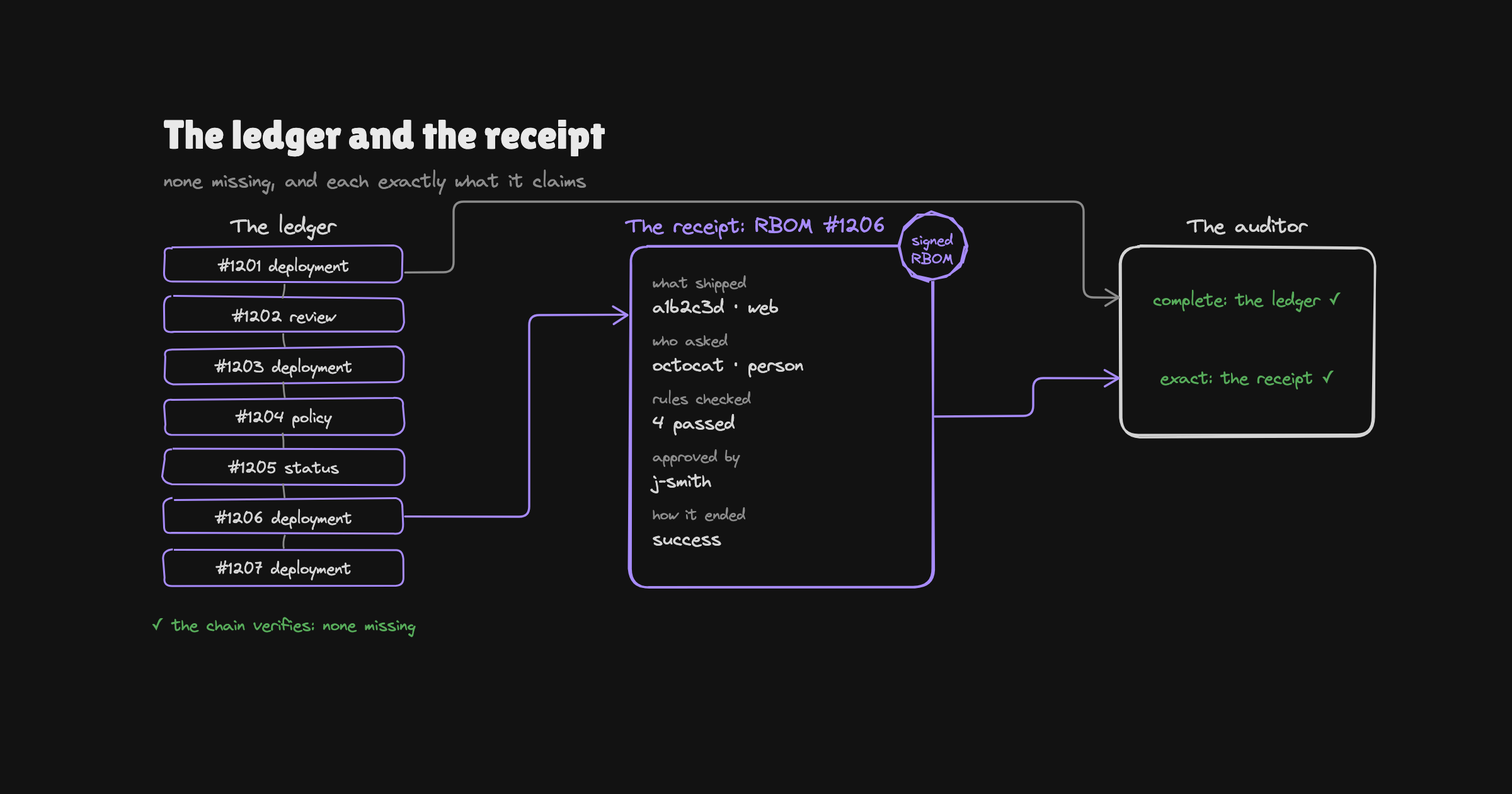
The ledger and the receiptnone missing, and each exactly what it claimsThe ledger#1201 deployment#1202 review#1203 deployment#1204 policy#1205 status#1206 deployment#1207 deployment✓ the chain verifies: none missingThe receipt: RBOM #1206what shippeda1b2c3d · webwho askedoctocat · personrules checked4 passedapproved byj-smithhow it endedsuccesssignedRBOMThe auditorcomplete: the ledger ✓exact: the receipt ✓The ledger: deployments are appended to a hash-chained audit trail that verifies, so none is missing. The receipt: one deployment's RBOM records what shipped, who asked, the rules checked, who approved and how it ended, and is signed. An auditor relies on both
deployments

The ledger and the receipt: how SpockOps proves every deployment

A hash-chained audit trail proves no deployment is missing. An RBOM proves each one is exactly what it claims. Why regulated firms need both, and how …
7 min read
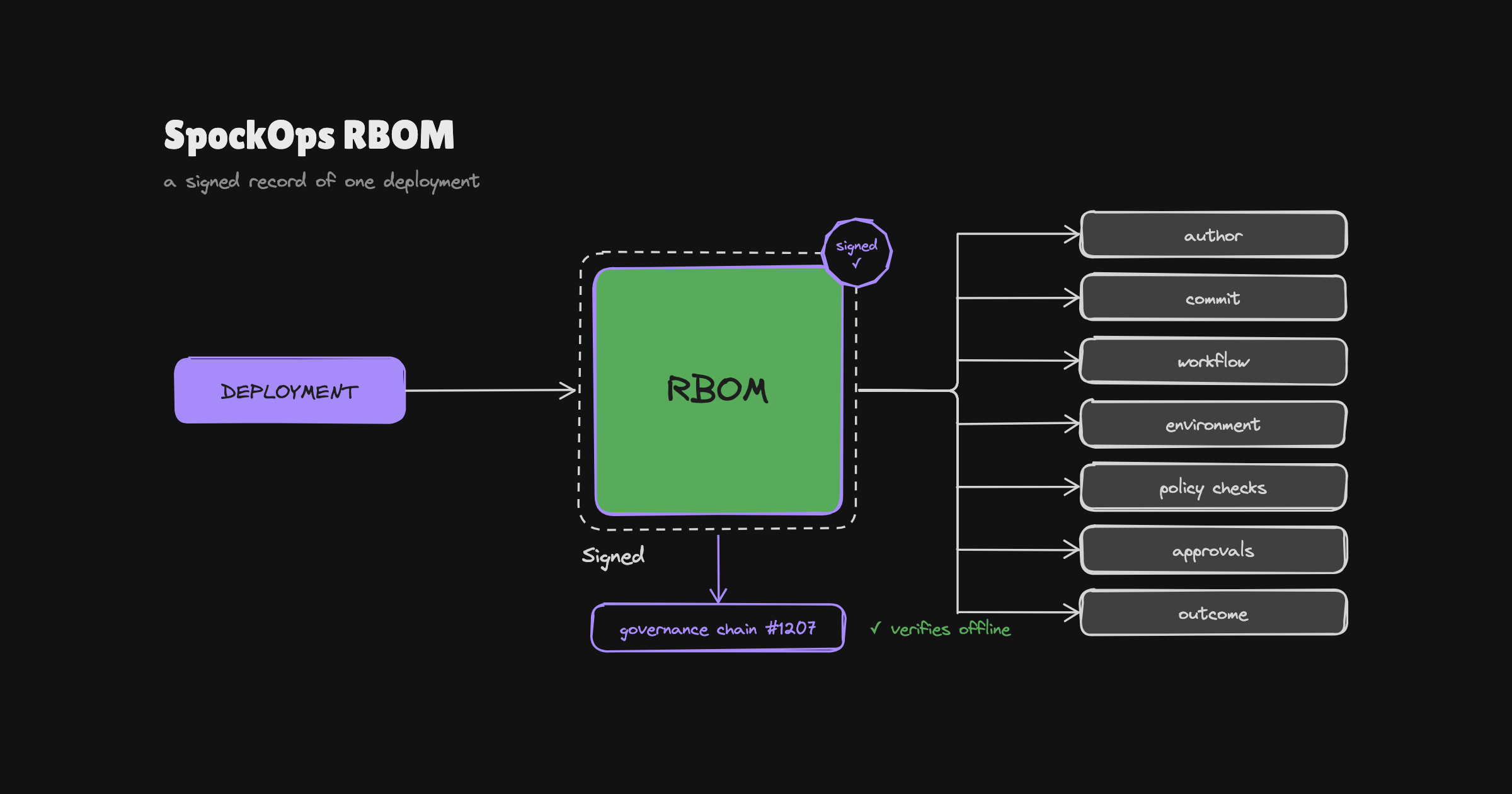
SpockOps RBOMa signed record of one deploymentDEPLOYMENTRBOMSignedsigned✓authorcommitworkflowenvironmentpolicy checksapprovalsoutcomegovernance chain #1207✓ verifies offlineA deployment becomes its Release Bill of Materials: a record of its author, commit, workflow, environment, policy checks, approvals and outcome, signed, added to the governance chain and verifiable offline
deployments

The Release Bill of Materials: a signed record of every deployment

An RBOM is a signed, chained record of one deployment: what shipped, who asked, which rules were checked, who approved it and how it ended.
8 min read
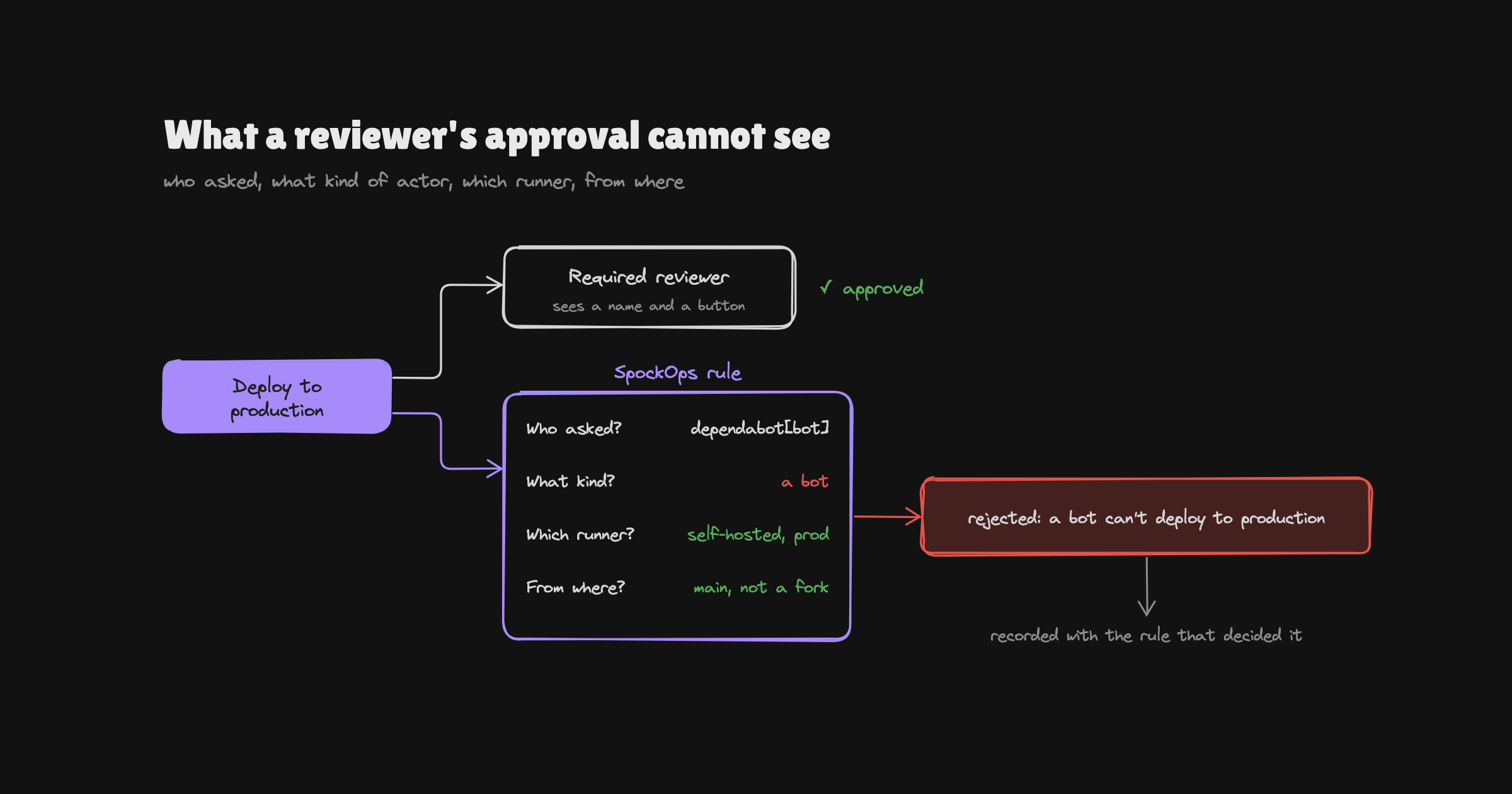
What a reviewer's approval cannot seewho asked, what kind of actor, which runner, from whereDeploy toproductionRequired reviewersees a name and a button✓ approvedSpockOps ruleWho asked?dependabot[bot]What kind?a botWhich runner?self-hosted, prodFrom where?main, not a forkrejected: a bot can't deploy to productionrecorded with the rule that decided itA bot's deployment to production: the required reviewer, who sees a name and a button, approves it; SpockOps' rule asks who asked, what kind of actor, which runner and from where, finds a bot deploying to production, rejects it and records why
deployments

Deployment protection rules: what a reviewer's approval cannot see

How GitHub deployment protection rules work, what required reviewers cannot see, and how SpockOps approves each deployment by actor, runner, kind and origin.

6 min read

Every run checked.
Every deployment decided.
Every decision signed.

One rulebook for people, bots and agents across your GitHub Actions estate. SpockOps checks every run as it starts, decides each deployment by who asked, what ran it and where it came from, and signs every decision into a record your auditors can re-run. Engineers see each verdict as a check beside their tests, and nothing in their workflows changes.

No changes to any workflow or repository: nothing runs inside your pipelines.