 SpockOps
The SpockOps Blog
What we learn running, pricing and governing GitHub Actions, written down as we go.
securitysupply-chaingovernance
GitHub Actions lockfiles are generally available: what they fix, and what to watch across every repository
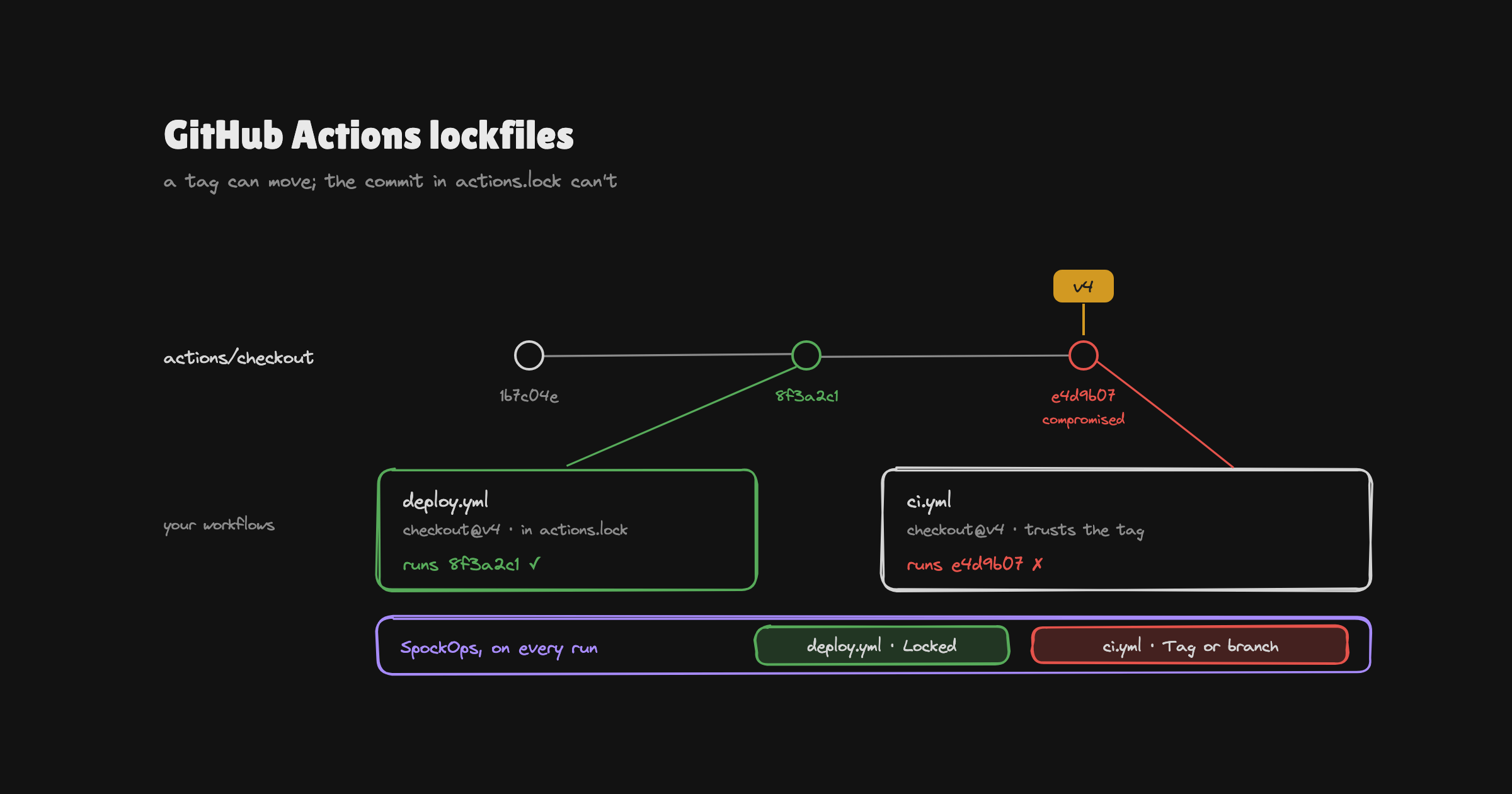
GitHub Actions workflow lockfiles pin every action, transitive dependency and reusable workflow to a commit. What they fix, what they don't, and how to start using one today.
Every run checked.
Every deployment decided.
Every decision signed.
One rulebook for people, bots and agents across your GitHub Actions estate. SpockOps checks every run as it starts, decides each deployment by who asked, what ran it and where it came from, and signs every decision into a record your auditors can re-run. Engineers see each verdict as a check beside their tests, and nothing in their workflows changes.
No changes to any workflow or repository: nothing runs inside your pipelines.